Collaterals
Eligible collateral assets also support Isolated Margin, including supported non-USDC collateral. Isolated margin remains denominated and accounted for in USDC. When projected USDC borrowing from opening an isolated-margin position exceeds the 50,000 USDC limit, automatic conversion of collateral into USDC is triggered to reduce the borrowing amount.Max Deposits (Global)
These values represent the maximum amount of each collateral type that can be deposited across all users on a global scale for the specified blockchain network.Max Deposits (User)
What is Loan-to-value (LTV)?
Loan-to-Value (LTV) is a key risk metric that measures the ratio of your negative USDC value, which includes your negative balance (USDC_balance) and unrealized PnL (upnl), to your collateral’s value. On Orderly, LTV replaces traditional credit scores to determine your borrowing power in our asset-backed lending system. A lower LTV signifies a safer loan.
By maintaining a healthy LTV, you can maximize the loan you can access while enhancing the safety of your position against market volatility. This empowers you to borrow with confidence. Your collateral is held securely by Orderly until the loan is repaid, providing a clear and powerful way for you to leverage your holdings.
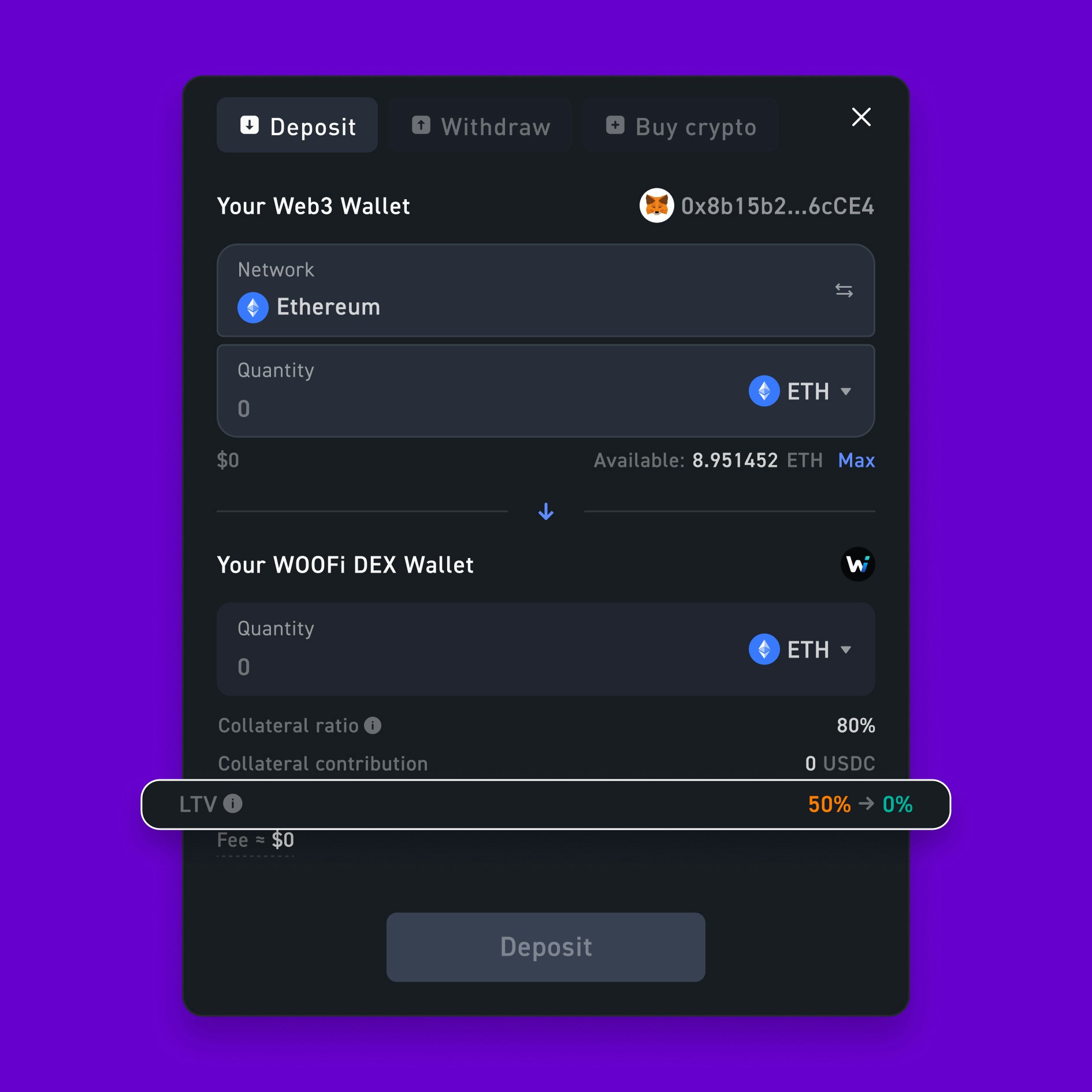
How to calculate LTV
The acceptable range of LTV ratio remains below 95%. Auto conversion of collateral will be triggered if the LTV ratio reaches 95% and above.
Collateral Ratio
What is Collateral Ratio?
The Collateral Ratio on Orderly is the value at which we recognize your asset deposited as collateral, expressed as a percentage. A higher ratio provides a greater safety buffer against market fluctuations and lowers the risk of liquidation. Orderly calculates this by assigning asset-specific “weights,” where more volatile assets contribute less to the ratio than stable assets. The Collateral Ratio serves as the primary indicator of an account’s financial health on the platform.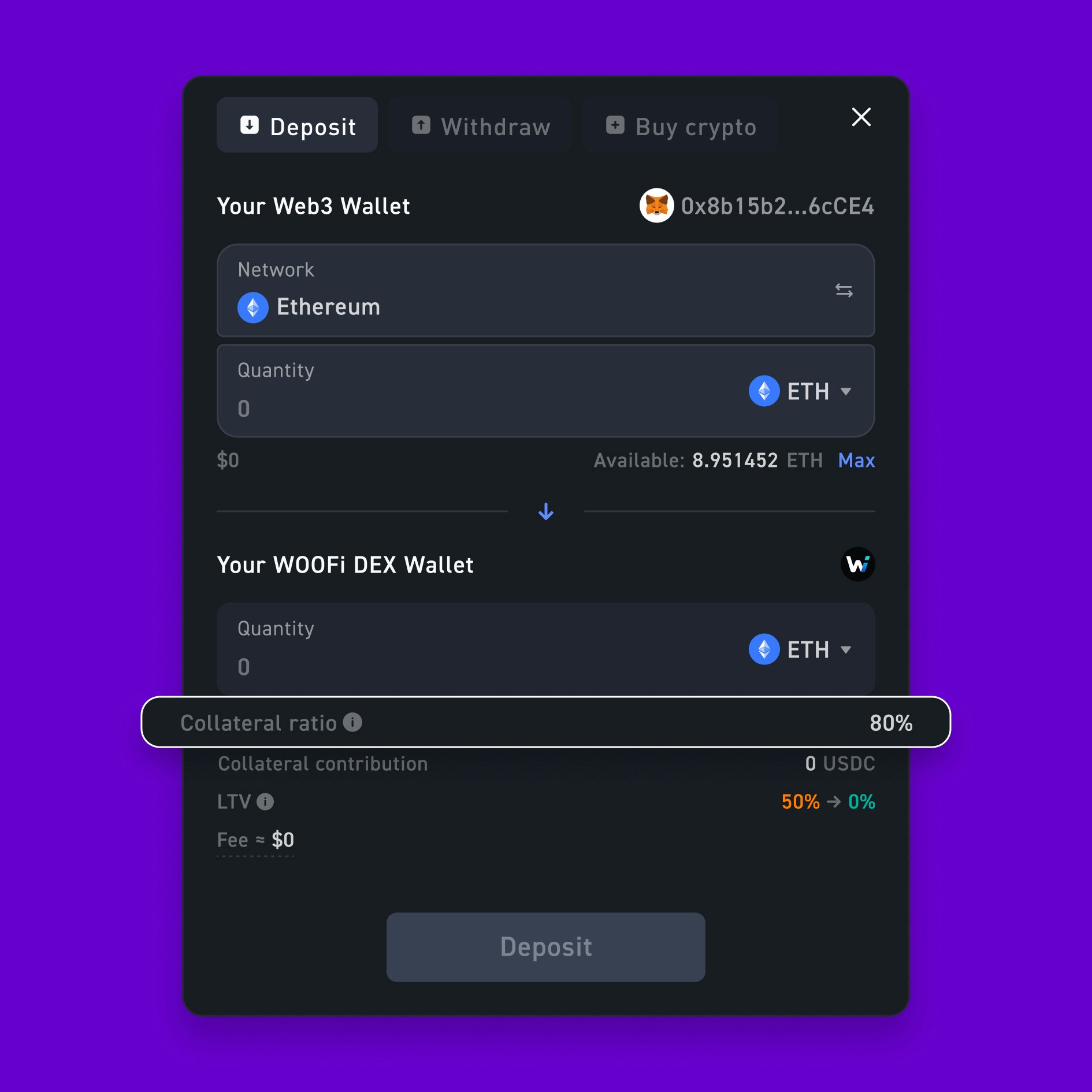
How to Calculate Weight?
DCF_i= Discount Collateral FactorK= 1.2
Weight & Discount Collateral Factor
Weight and DCF will be determined based on the table below:Collateral Value
Total Collateral Value
Free Collateral
Total Account Value
Auto Conversion (Haircuts)
If your Loan-to-Value (LTV) ratio reaches the 95% threshold or a negative USDC value equivalent to -11,000, the system will automatically convert a necessary portion of your collateral into USDC. This action immediately reduces your LTV to a safer level, helping to preserve your account. This is a protective measure to manage risk. As always, remember that the lower your LTV ratio, the more secure your position is from this type of automated deleveraging. The fee for auto conversion of each collateral will follow the table below:Manual Conversion
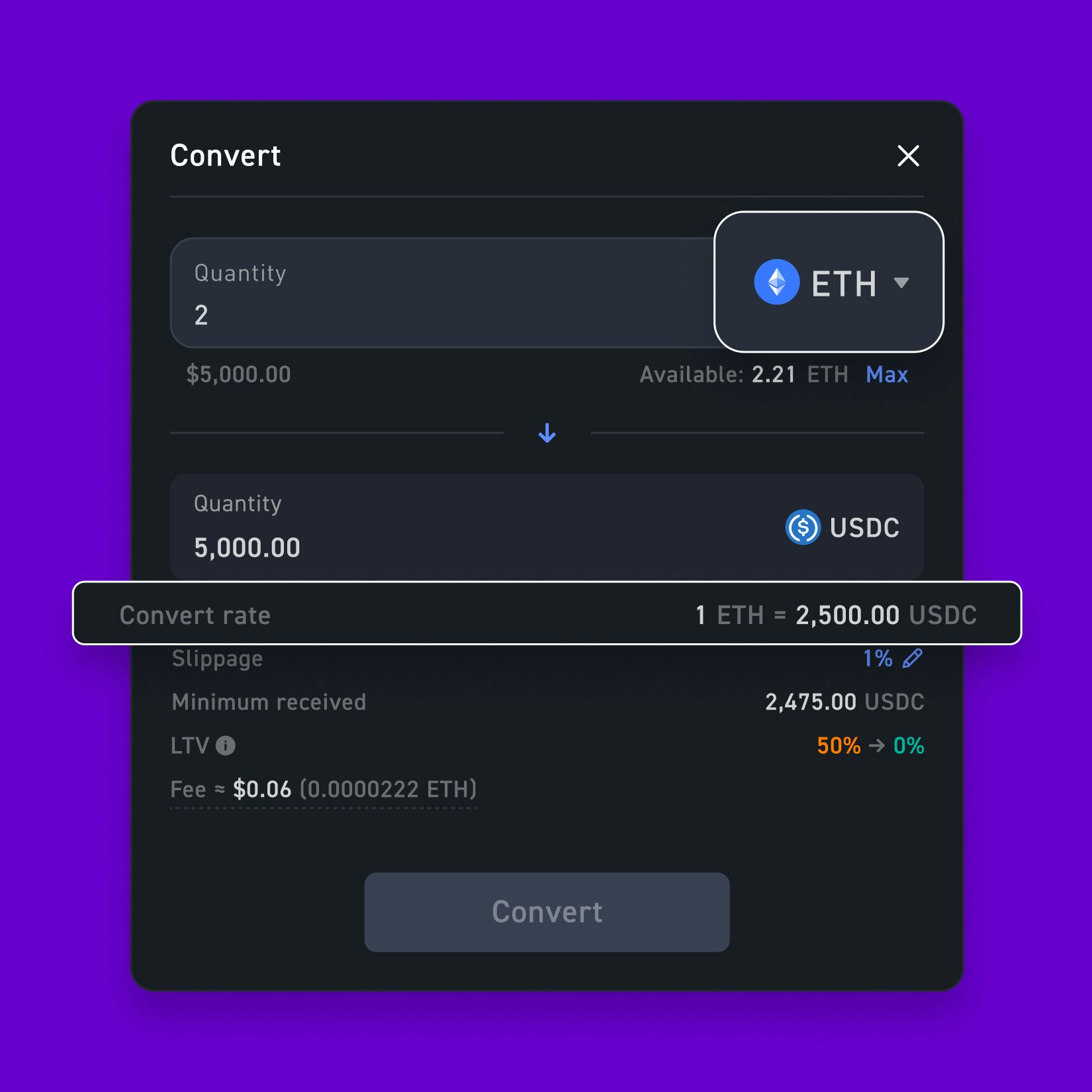
We recommend monitoring your LTV ratio to ensure it stays below the 95% and/or -11,000 USDC threshold. We permit manual conversion of collateral to assist with this maintenance via on-chain swaps. Each collateral’s minimum and maximum swap amount can be found in the table below: